
Written by Chloe Evans, Speech Pathologist
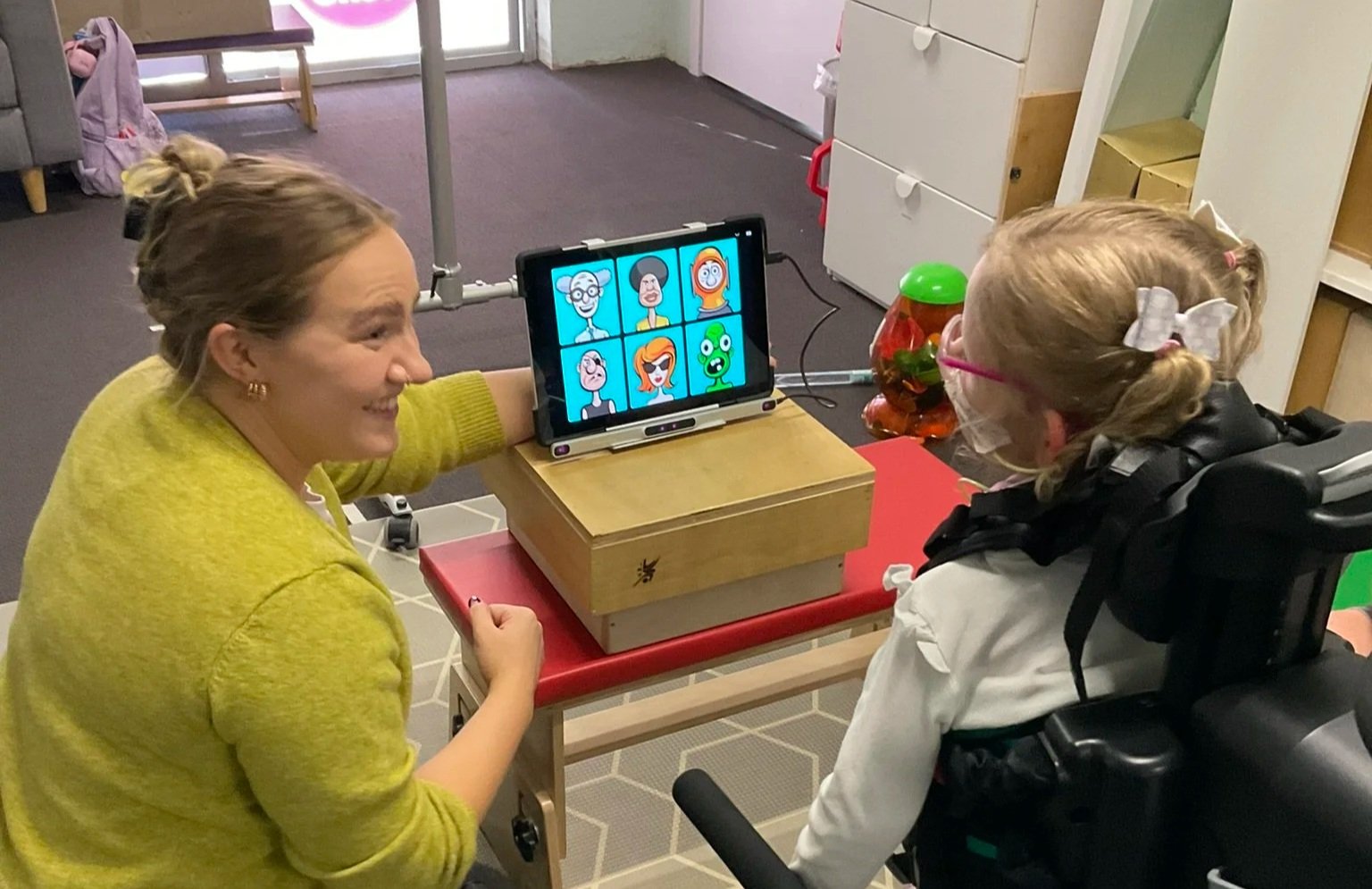
AAC (Augmentative and Alternative Communication) includes the tools, strategies and systems used to support or supplement spoken language, or provide an alternative means of communication for people with communication difficulties.
When choosing an AAC system, there is no one-size-fits-all approach. Every child has unique communication needs, abilities, preferences and goals. Trialling different systems helps us explore which options best support each child and their communication journey.
It is important to remember that an AAC trial is an opportunity for a child to explore, learn and become familiar with a system. It also allows us to make adjustments based on their needs and responses. An AAC trial is never a test of a child’s ability to communicate. Instead, it is an opportunity for us to learn what works best for them.
Finding the right AAC system is about more than choosing a device. It’s about finding a way for a child to communicate that works for them, considering their individual needs, preferences and everyday environments.
Why is an AAC trial useful?
Every child communicates differently, with their own strengths, preferences and support needs. There are many AAC options available, including communication books, picture boards and speech-generating devices. Even within these options, systems can vary significantly in their layouts, vocabulary, access methods and features.
An AAC trial allows us to explore these differences and understand how well a system supports a child’s communication in real-life situations.
This is why we often arrange for families to trial AAC systems at home and in other everyday environments over several weeks, rather than relying solely on observations made during a few clinic sessions. A system might work well in a structured therapy activity, but how does it fit into the child's everyday life?
For example, a child might successfully use a paper-based communication board during therapy. However, if they love swimming, the paper may not be practical around water. A different format or a more durable system may be needed to support their communication during this activity.
Trialling AAC in different environments helps us understand what works, what barriers might arise and what adjustments may be needed. It also supports families and clinicians to make informed decisions about suitable systems, equipment and potential funding requirements.
What do Speech Pathologists consider when exploring AAC?
There is a lot to consider when identifying an appropriate AAC system! Speech Pathologists work closely with children and their families, often in collaboration with other professionals, to understand the child’s communication needs and identify suitable options.
Current communication
We begin by exploring how the child currently communicates. Do they use speech, gestures, facial expressions, body movements, signs, pictures or other communication methods? What are their strengths, and how do they successfully communicate their messages? We also consider what happens when they are unable to get their message across.
As Speech Pathologists, we build on a child’s existing abilities and meet them where they are in their communication journey. AAC should complement the child’s current communication and provide additional ways for them to express themselves.
Motor abilities and physical access
We also consider how the child can physically access an AAC system. Can they accurately select symbols using their finger? Would they benefit from larger buttons, a keyguard to support selection accuracy, or a stylus? Alternatively, might they require switch access or an eye-gaze system?
This is where collaboration within a multidisciplinary team can be particularly valuable. We may consult with the child’s Occupational Therapist to better understand their fine motor skills and access needs, and their Physiotherapist regarding positioning, postural support and any existing equipment that could be incorporated into their AAC setup.
Vision, hearing and sensory needs
We consider whether the child has any vision or hearing differences or sensory preferences that may influence how they interact with AAC. For example, a child may benefit from larger symbols, high-contrast displays, reduced visual clutter or a different way of accessing information.
These factors help us identify adjustments that make the system as accessible and comfortable as possible.
Language and communication goals
An AAC system needs to give a child opportunities to communicate for a range of purposes, not just to request items or express basic needs.
We consider whether the child can use the system to share ideas, ask questions, comment, socialise, express emotions and tell others about their experiences. We also consider how the vocabulary and layout can support their current communication abilities while allowing for ongoing language development.
Everyday environments and communication partners
We explore where the child needs to communicate, including at home, in the community, at childcare or school, and during therapy. We also consider who they communicate with and whether those people will be able to support the use of the system.
An AAC system needs to be practical and accessible across the child’s everyday environments. Supporting communication partners to understand and model AAC is an important part of this process.
Interests and preferences
Finally, we consider what motivates the child! Their favourite toys, activities, people and topics can provide meaningful opportunities to explore AAC and communicate.
Incorporating motivating vocabulary and personal interests can help a child see how AAC can be used to express their own ideas and participate in activities that matter to them.
As you can see, there is a lot that goes into selecting an AAC system. This is exactly why trialling is such an important step!
What does an AAC trial actually involve?
Although every child’s AAC journey is different, a trial will generally involve several stages.
Understanding the child’s needs: We gather information about the child’s current communication, strengths, goals, access needs and everyday environments.
Exploring different options: We consider suitable AAC systems, vocabulary layouts, access methods and features based on the information gathered.
Setting up a trial system: We configure a system to suit the child and work with key communication partners to provide the information and support they need to use AAC during everyday routines.
Introducing AAC through meaningful activities: The child is given opportunities to explore the system during motivating, low-pressure activities. Communication partners model how AAC can be used for different purposes, such as requesting, commenting, protesting, asking questions and sharing ideas.
Gathering observations and feedback: We observe how the child interacts with the system and gather feedback from the child, their family and other people supporting their communication.
Reviewing and making adjustments: We consider what is working well and what may need to change. This might involve adjusting the vocabulary, layout or access method, or exploring a different system altogether. Sometimes, a trial may need to be extended to give the child more opportunities to become familiar with the system.
Importantly, an AAC trial is not always a straightforward process. It may take several adjustments or trials of different systems before we identify an option that best meets the child’s needs.
What are the goals and expectations during an AAC trial?
One of the most important things to understand is that an AAC trial is about exploring the system, not testing the child.
We do not expect a child to immediately understand how to use a new system or communicate independently as soon as it is introduced. Like any new skill, learning to use AAC takes time, practice and support.
During a trial, progress may look like:
Exploring the device or communication board.
Showing interest in particular symbols, vocabulary or features.
Watching a communication partner model how to use AAC.
Beginning to make selections or intentionally communicate messages.
Using AAC for different purposes, such as requesting, commenting, protesting or sharing ideas.
Finding new ways to communicate across everyday activities and environments.
A child does not need to use the system perfectly or demonstrate a particular number of words for the trial to be valuable. Their responses, preferences and communication attempts all help us understand whether the system is a suitable option and what support may be needed.
Communication partners also play an important role. By modelling AAC during everyday interactions, without placing pressure on the child to copy or respond, they provide opportunities for the child to learn how the system can support their communication.
Who is involved in an AAC trial?
AAC is a collaborative process. While the Speech Pathologist often coordinates the trial, successful implementation relies on the people who know and support the child.
This may include:
The child: Their communication, interests, preferences and responses guide the process.
Parents and caregivers: They provide valuable insight into the child’s communication, routines and priorities, and share feedback about how the system works at home.
The Speech Pathologist: They help identify suitable systems, support implementation, model communication strategies and review the trial outcomes.
The broader multidisciplinary team: Occupational Therapists, Physiotherapists, educators and other relevant professionals may contribute their expertise, depending on the child’s needs.
Other communication partners: Family members, support workers and educators can help make AAC available and model its use across everyday environments.
It is important that the people supporting the child understand how to use the system and how to create opportunities for communication. This includes learning how to model AAC, respond to the child’s messages and support access to the system throughout the day.
The more consistently a child sees AAC being used meaningfully around them, the more opportunities they have to learn how it can support their communication.
How does feedback shape the trial?
Feedback is an essential part of the AAC trial process. We want to understand how the system works for the child, not just whether it appears suitable during a therapy session.
The child’s feedback includes their interest, engagement, preferences, communication attempts and responses to the system. We pay attention to how they interact with it and whether it provides opportunities to communicate in ways that are meaningful to them.
Family feedback is equally important. We want to understand whether the system is practical for everyday use at home, whether it supports the child’s communication during routines and activities, and whether there are any barriers or challenges. Family involvement and confidence are important considerations when determining whether a system can be used consistently.
Feedback from the broader team helps us understand how the system works in different environments and whether additional adjustments, resources or training may be needed.
This information helps guide our decisions. We might add new vocabulary, change the symbol layout, adjust the access method or explore another system. These changes are a normal part of the process and help us work towards the best possible fit for the child.
What happens after an AAC trial?
At the end of a trial, we review our observations and feedback against the original goals. We consider which features supported the child’s communication, what barriers remain and whether the system meets their needs across everyday environments.
Depending on the outcomes, the next steps may include:
Continuing with the current system.
Making further adjustments to the vocabulary, layout or access method.
Trialling another AAC option.
Identifying any equipment, resources or communication partner training required.
Exploring funding options, including relevant NDIS processes where applicable.
Developing ongoing therapy goals to support the child’s communication and use of AAC.
The end of a trial does not mean the end of the AAC journey. Communication needs, interests and abilities can change over time, and a system may need to be reviewed or adapted as the child develops.
Our aim is to identify an approach that gives the child meaningful opportunities to communicate and supports their participation at home, in the community and in other important areas of their life.
Finding the right fit for your child
Every child deserves a way to communicate that works for them. Finding the right AAC system takes time, patience, collaboration and opportunities to explore what is possible.
At Lifespan Therapies, we love working alongside children and their families throughout this process, celebrating the little wins and helping children develop ways to express themselves, connect with others and participate in the world around them.
Because every communication attempt matters, and every child deserves to have a voice.