
Written by Brigit McMahon, Physiotherapist
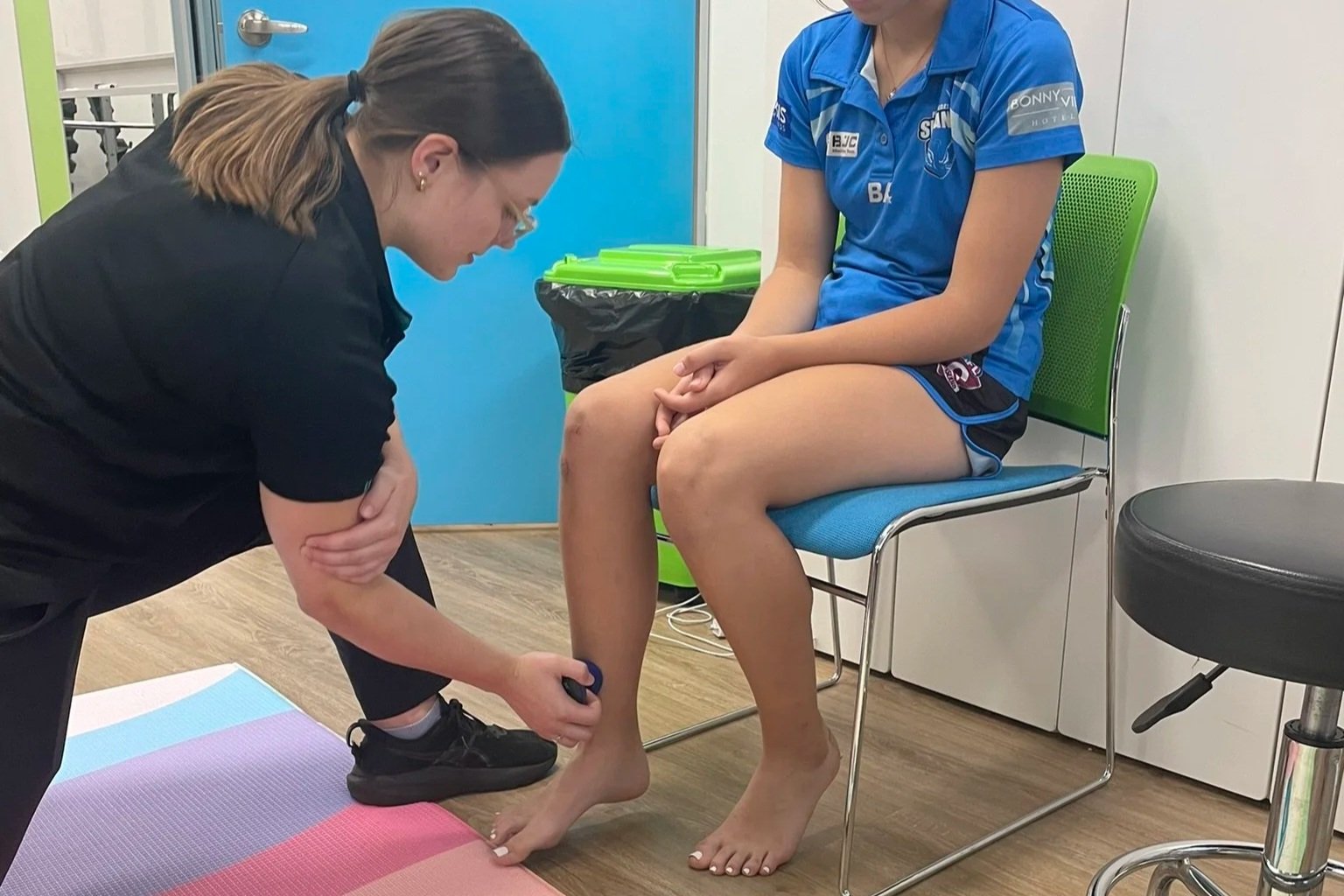
Leg pain is common in active children, but how do you know whether it is typical growing pains or something that needs further assessment?
What are growing pains?
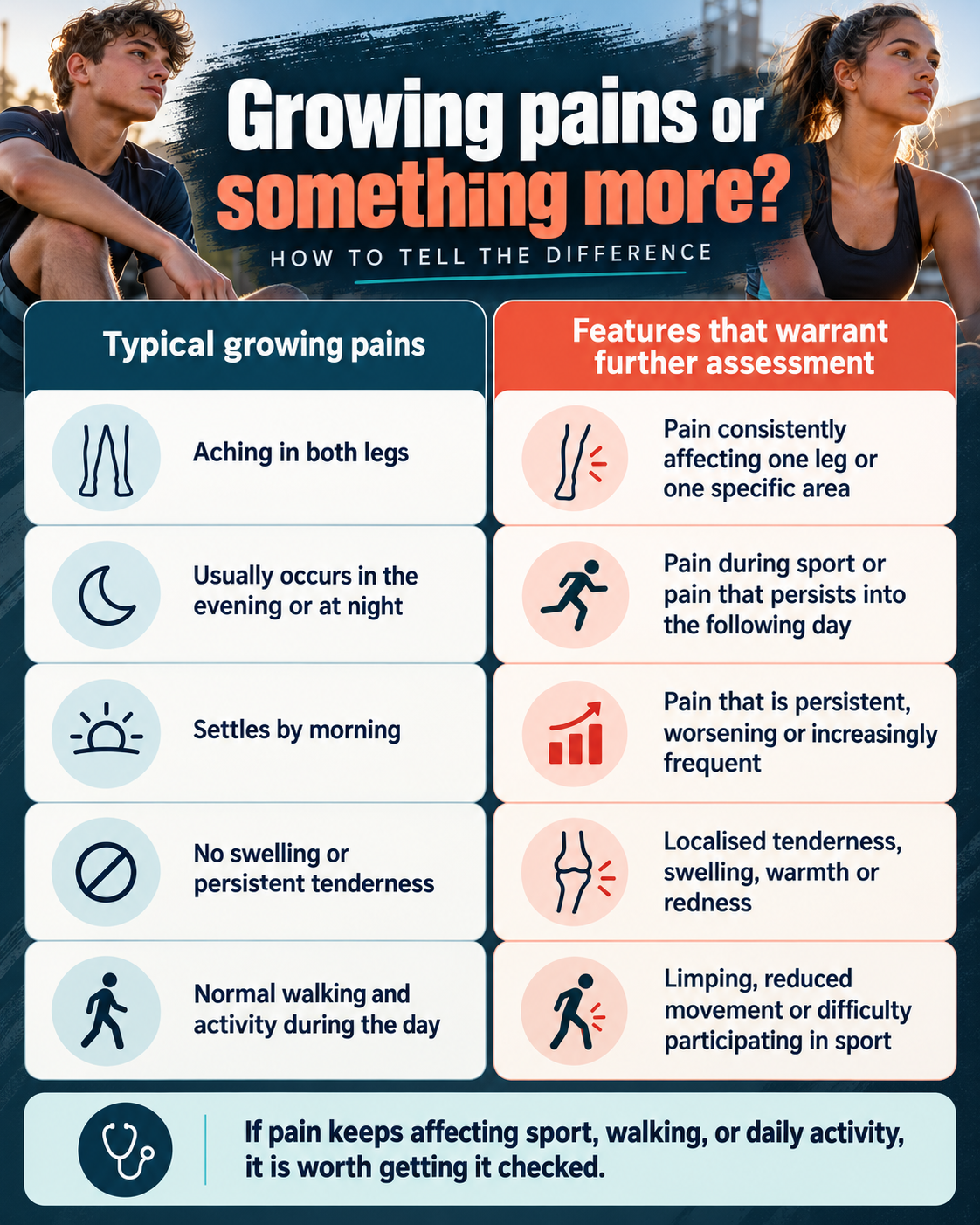
Growing pains typically involve aching or throbbing discomfort in both legs, often affecting the thighs, calves or area behind the knees. The pain usually occurs in the late afternoon or evening, sometimes waking children during the night, and generally settles by morning.
Children with typical growing pains are usually able to participate in their usual activities during the day, with no persistent tenderness, swelling or changes in their movement.
Despite the name, there is no clear evidence that growing pains are directly caused by bones growing. The term describes a pattern of recurring childhood pain rather than a growth-related condition.
When might the pain be related to sport?
Sports-related pain often follows a different pattern. It may occur during or after running, jumping, kicking or training, and can become more noticeable as training demands increase.
Some common causes of pain in young athletes include:
· Osgood-Schlatter disease: pain and tenderness over the bony prominence at the front of the knee, commonly aggravated by running and jumping.
· Sever's disease: heel pain associated with running and jumping, particularly in growing children.
· Muscle strains: pain following a sudden movement, sprint or change of direction.
· Bone stress injuries: pain that develops with repetitive loading and may become progressively worse if training continues.
Persistent or activity-related pain should not automatically be attributed to growing pains, particularly if it affects a child's ability to train, play or walk comfortably.
What should parents look out for?
The following differences can help guide your next steps.
When should you seek help?
Arrange an assessment with your GP or physiotherapist if your child's pain keeps returning, affects sporting participation, persists during the day or is becoming worse.
Seek urgent medical assessment if your child has severe or localised pain with a fever, cannot bear weight, develops a hot or swollen joint, or appears significantly unwell. These symptoms can indicate conditions that require prompt investigation.
How can a paediatric sports physiotherapist help?
A paediatric sports physiotherapist can assess your child's symptoms, movement, strength, mobility and sporting demands to help identify potential causes of pain. If the presentation is consistent with a sports-related injury, management may include modifying training loads, targeted strengthening, movement retraining and a gradual return to sport.
If symptoms suggest a condition requiring medical investigation, referral to a GP or other appropriate healthcare professional may be recommended.
If your child regularly complains of leg pain, it is worth paying attention to when it occurs, where it is located and whether it affects their ability to move and play. These details can help guide the next steps and ensure they receive appropriate care.