
Written By Elizabeth Donnellan, Director & Physiotherapist
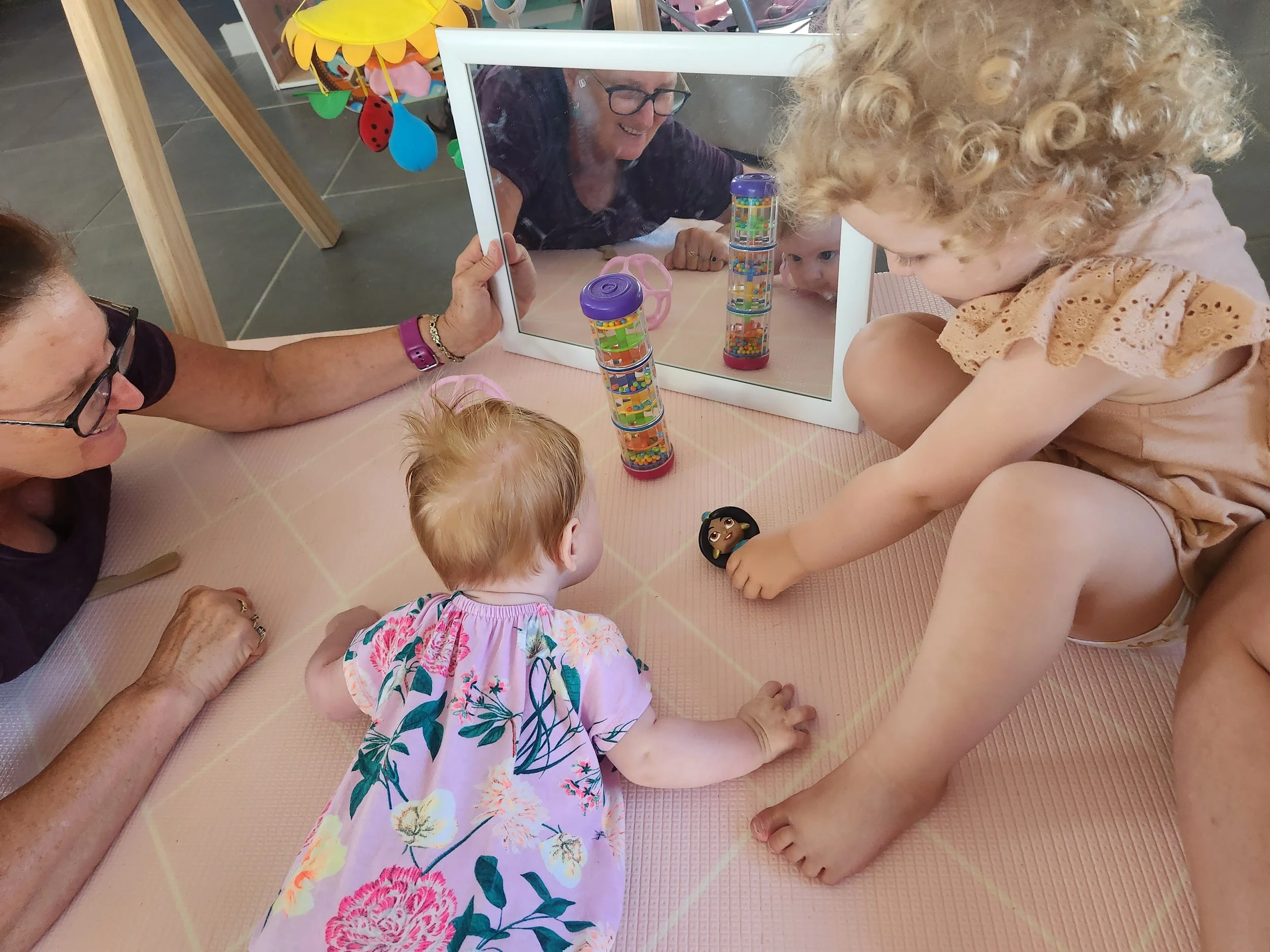
Tummy time is supposed to be simple: a few minutes on the floor, building strength. But for a lot of babies, it's a battle from the start — crying almost immediately, or only ever turning their head to look one way no matter which way you place them. Many parents are told this is just a phase their baby will grow out of. Sometimes that's true. Often, though, it's the same underlying tightness that shows up in feeding — and if it isn't resolved, it can carry forward further than most people expect.
The pattern that's easy to miss
A baby who strongly prefers one side — for feeding, for sleeping, for looking around the room — is often showing early signs of tension or restriction through the neck and body (commonly known as torticollis). It's the same picture whether it turns up as tummy time refusal, a flat spot forming on one side of the head, or a difficult time settling in certain positions. It's not a behaviour issue and it's not a phase to simply wait out — it's a physical one.
Where the tightness actually comes from
It's easy to assume this is only about a difficult birth, but that's only part of the picture. Babies spend their final months of pregnancy in a rapidly shrinking space, often settling into one position for a long stretch of time simply because there's nowhere else to go. That alone can be enough to create tightness on one side before birth even happens. Babies from a multiple pregnancy — twins, triplets, or more — have even less room to move in those final months, which is part of why tightness and side preferences turn up more often for them.
Why it's worth sorting out early, not just waiting
A newborn's asymmetry doesn't always stay contained to "just" head shape or tummy time. If the underlying tightness isn't addressed, it can shape how a baby moves more broadly — which side they roll to first, how evenly they build strength on both sides, and how comfortable they are in the positions that come next, like sitting, crawling, and pulling to stand. None of this means a delay is guaranteed. It means the earlier the tightness is addressed, the less it has a chance to influence everything that follows.
The good news
This is very treatable, especially early. A physio assessment looks at how well your baby moves through their neck and body, identifies where the tightness sits, and gives you simple, specific stretches and positioning strategies to work into your day — not a long program, just the right few things, done consistently.
What to do next
If tummy time is a struggle, your baby has a strong side preference, or you've noticed a flat spot developing, it's worth having a proper look rather than waiting to see.
FAQs
Will my baby grow out of this on their own?
Sometimes mild preferences do ease with time and general movement. But when there's genuine tightness, it usually needs specific, hands-on help to fully resolve rather than time alone
.
Is a flat spot on my baby's head the same thing as torticollis?
They often go together, but not always. Either one on its own is worth a check, since they can influence one another.
What if my baby is already a few months old — is it too late?
No. Earlier is easier, but this can still be addressed well beyond the newborn period.