
Speech Is More Than Talking — The Many Roles of a Speech Pathologist
Written by Emilie Adams, Speech Pathologist.
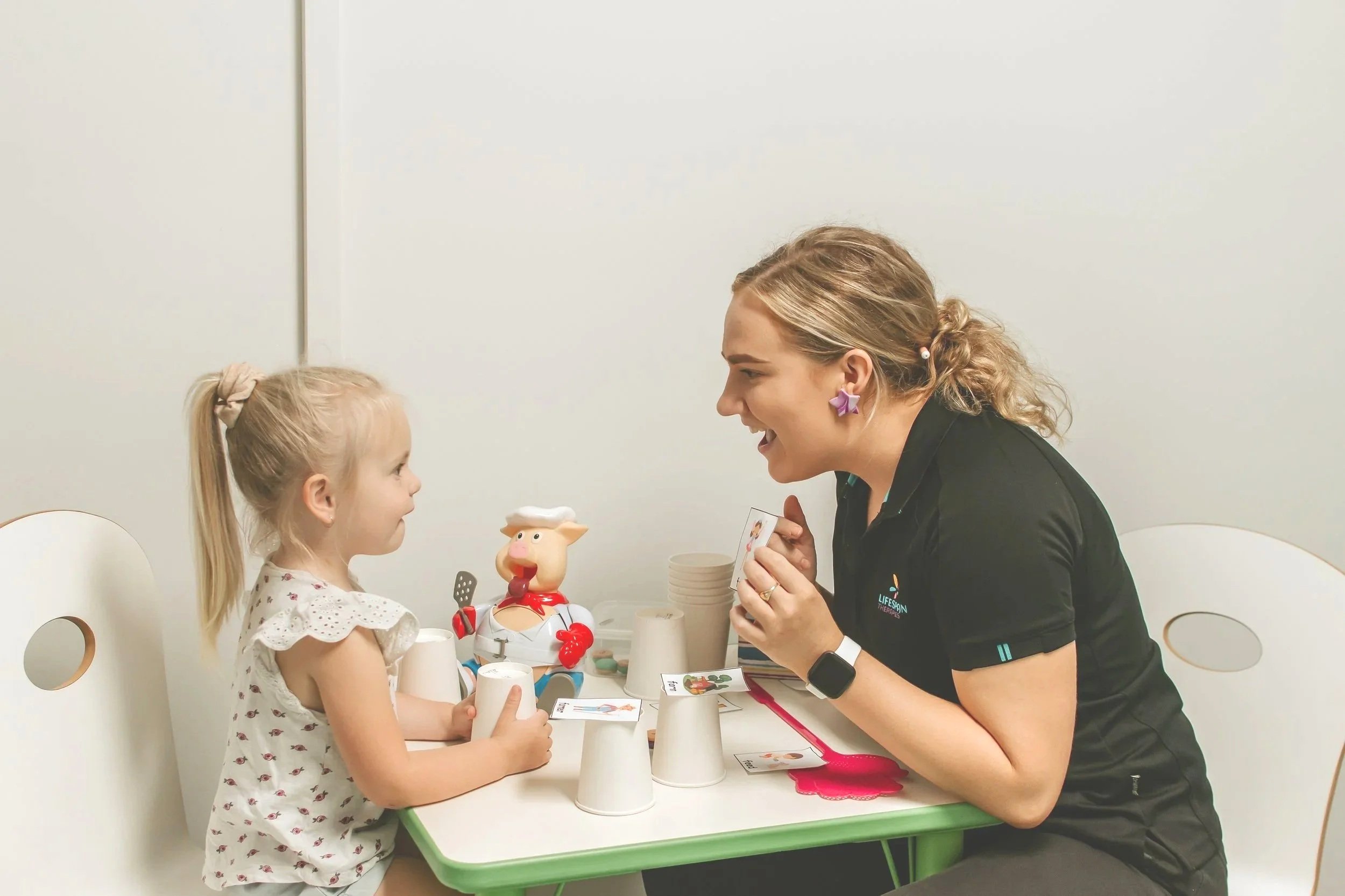
Many parents think of speech therapy as “fixing pronunciation,” but speech pathologists do much more. From language comprehension and social communication to feeding skills and oral motor development, speech therapy supports your child’s ability to interact confidently and learn effectively.
Types of Speech and Language Skills
Speech pathologist support children (and adults) across a range of different areas. This includes (but is not limited to):
Expressive language: Using words, sentences, and gestures to communicate. We help children put words into sentences, share ideas and feelings, tell stories and advocate for themselves.
Receptive language: Understanding instructions, stories, and concepts. We help children to understand new words, follow instructions to a new game, and understand stories.
Pragmatic/social skills: Knowing how to interact in different situations. We help children to learn how to start and join conversations, manage conflicts, make friends, and recognise and interpret facial expressions and body language to determine how someone might be feeling.
Speech sounds (articulation): Clarity of speech production. We help children when they swap sounds (e.g., ‘tat’ for ‘cat’) or delete sounds from words (e.g., ‘pi’ for ‘pig’). We also support children who are unable to pronounce particular sounds or who have lisps.
Literacy: Reading, spelling, and writing skills. We help children learn sound awareness for literacy (such as rhyming or sounding out words), letter-sound connections, and with more traditional literacy skills for reading and writing so they can read menus and signs or write birthday cards to friends.
Fluency: Smooth, natural-sounding speech. We help children who have fluency disorders or ‘stutters’. This could look like repeating sounds or words, stretching out sounds or getting ‘stuck’ on a sound, or avoid talking altogether because of how difficult it is for them. We support children to feel confident and relaxed when speaking.
Feeding: helping children eat and drink a variety of foods and textures safely and confidently. We support children to gain confidence in trying new foods, learn how to eat different food textures (e.g., chewy steak versus soft bread or crunchy carrot).
Orofacial Myology (OM): Supporting the muscles of the face and mouth to be able to eat, speak, and breathe well. We explore the muscles of the face and mouth to identify abnormalities (such as oral ties, mouth breathing, or enlarged tonsils) that could lead to airway obstruction. We also help with oral habits such as prolonged dummy use, thumb sucking, or nail biting. In some cases, Speech Pathologists refer to other health professionals such as dentists or ENT specialists.
Augmented and Alternative communication (AAC): Communication for everyone with or without spoken language. We use AAC as a tool to support those who are unable to be understood by others, still learning to speak, or cannot speak. With the support of AAC, we strive to give everyone a voice so that they can use their human right to communicate.
Signs Your Child Might Need Support
Limited vocabulary for their age
Difficulty following instructions
Trouble socialising or joining group play
Difficulty eating, chewing, or swallowing
Recognising Communication Needs
Educators are often the first to notice when a child might be experiencing communication difficulties. This could look like a student who struggles to follow instructions, take turns, ask for what they want or need, or join in group activities with peers. Recognising these early signs is important, as an early referral to a speech pathologist can make a significant difference. With the right support, children can develop the skills they need to communicate more effectively, reducing frustration and allowing them to participate more confidently and successfully in the classroom.
Our Approach
At Lifespan Therapies, we take an individualised and holistic approach to supporting children with communication and feeding challenges. Our sessions are often play-based and engaging, allowing children to learn and grow through meaningful, motivating activities. We work closely with parents and educators to ensure strategies are carried over into everyday routines and environments, helping progress happen beyond the clinic. Our goals focus on developing functional communication and participation — not just isolated speech sounds — so that each child can connect, express themselves, and thrive in their daily life.
Our speech pathologists in Brendale support children’s communication, confidence, and connection. Book an early communication screening.